Key Findings
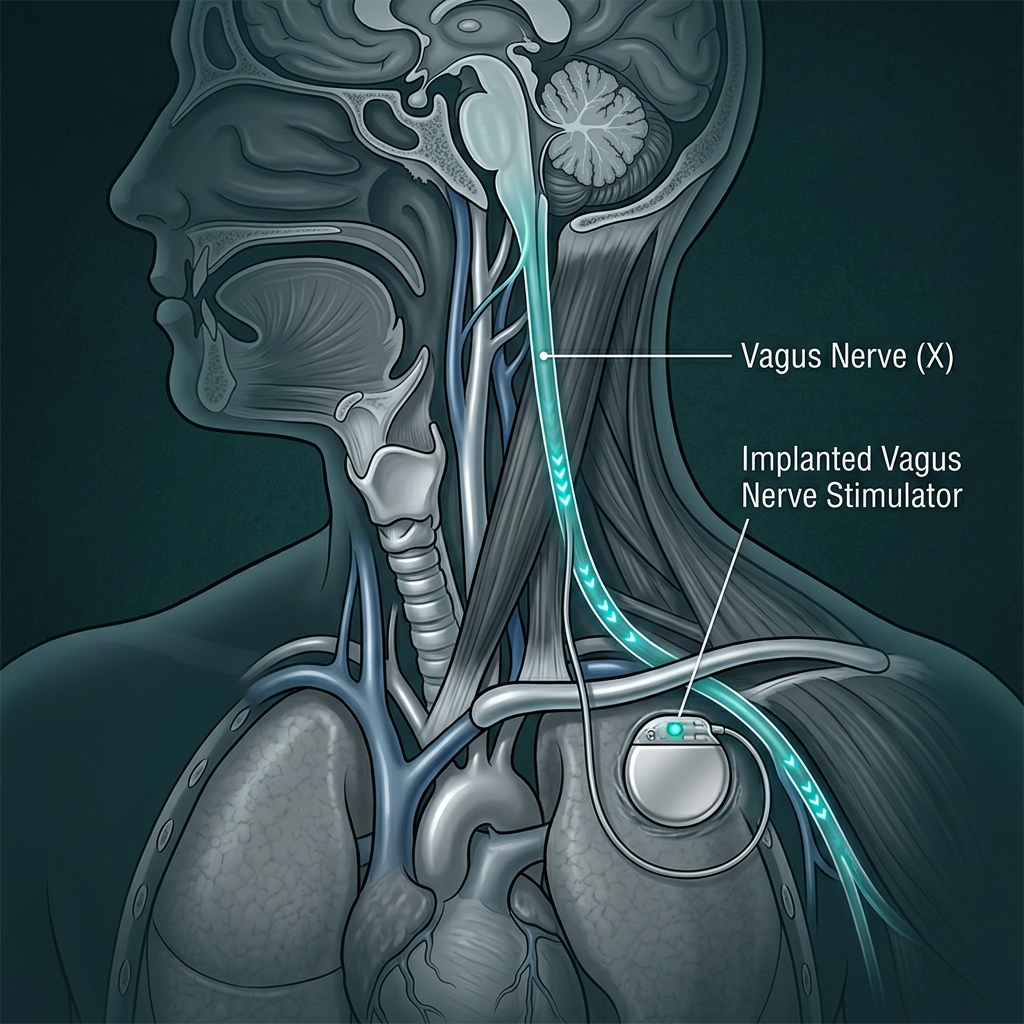
The RECOVER trial — the largest prospective study of implanted vagus nerve stimulation (VNS) for treatment-resistant depression (TRD) — has published its extended follow-up data demonstrating sustained clinical benefit over a minimum two-year observation period. Patients who achieved clinical response (≥50% reduction in Montgomery-Åsberg Depression Rating Scale scores) at one year maintained or improved their gains at the two-year mark, with a response durability rate of 76.3%.
Notably, the trial documented a significant reduction in chronic suicidal ideation among VNS recipients, with Sheehan Suicidality Tracking Scale scores decreasing by a mean of 41% from baseline. Functional capacity — measured by the Sheehan Disability Scale — improved progressively over the two-year period, suggesting that VNS effects on functional recovery may continue to accrue beyond the initial mood improvements.
The study also generated new international expert consensus statements providing clearer frameworks for clinical VNS implementation, recommending that VNS be considered for patients who have failed at least four adequate antidepressant trials, psychotherapy, and at least one other neuromodulation approach (TMS or ECT).
Why This Matters for Body-Mind Practice
The RECOVER trial's two-year durability data addresses a critical gap in neuromodulation research: whether initial treatment gains persist. For body-mind practitioners, the finding that functional recovery continues to improve after mood stabilization suggests that VNS may create a neuroplastic window during which complementary practices — breathwork, movement therapy, meditation — could be more effectively integrated. The vagus nerve is the primary conduit between body-based practices and central nervous system regulation, making VNS research directly relevant to understanding how autonomic tone modulation drives clinical outcomes.
Source
- RECOVER trial: Implanted VNS sustained depression relief. — American Journal of Psychiatry