Key Findings
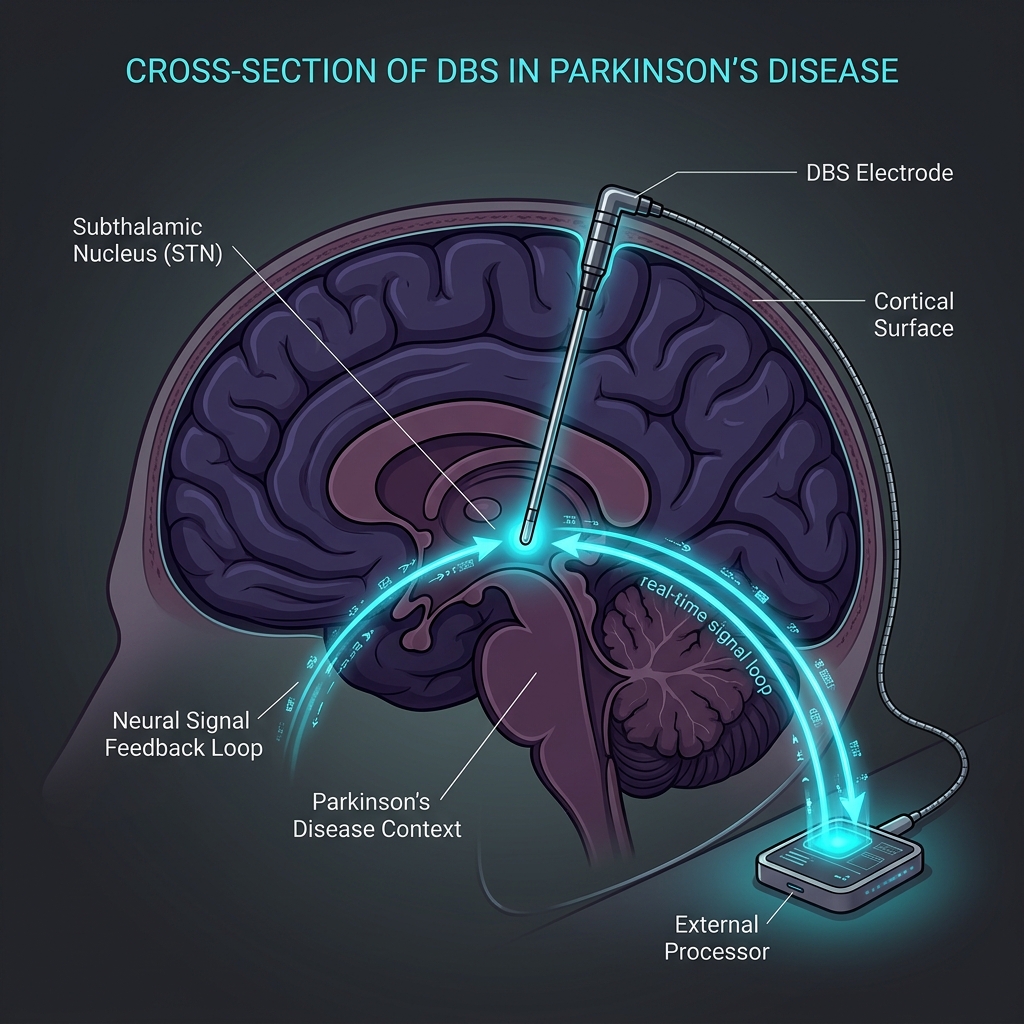
Conventional deep brain stimulation (DBS) for Parkinson's disease delivers continuous electrical pulses at fixed parameters — regardless of whether the patient is walking, sleeping, or experiencing medication fluctuations. In 2026, multiple research programs have advanced adaptive DBS systems that continuously monitor neural biomarkers and adjust stimulation in real time, representing a fundamental shift from open-loop to closed-loop neuromodulation.
The approach uses chronically implanted sensing electrodes in the subthalamic nucleus (STN) that detect beta-band oscillations (13-30 Hz) — a neural signature that correlates with motor symptom severity in Parkinson's disease. When beta power exceeds a patient-specific threshold, the device increases stimulation; when beta power normalizes, stimulation decreases or pauses entirely.
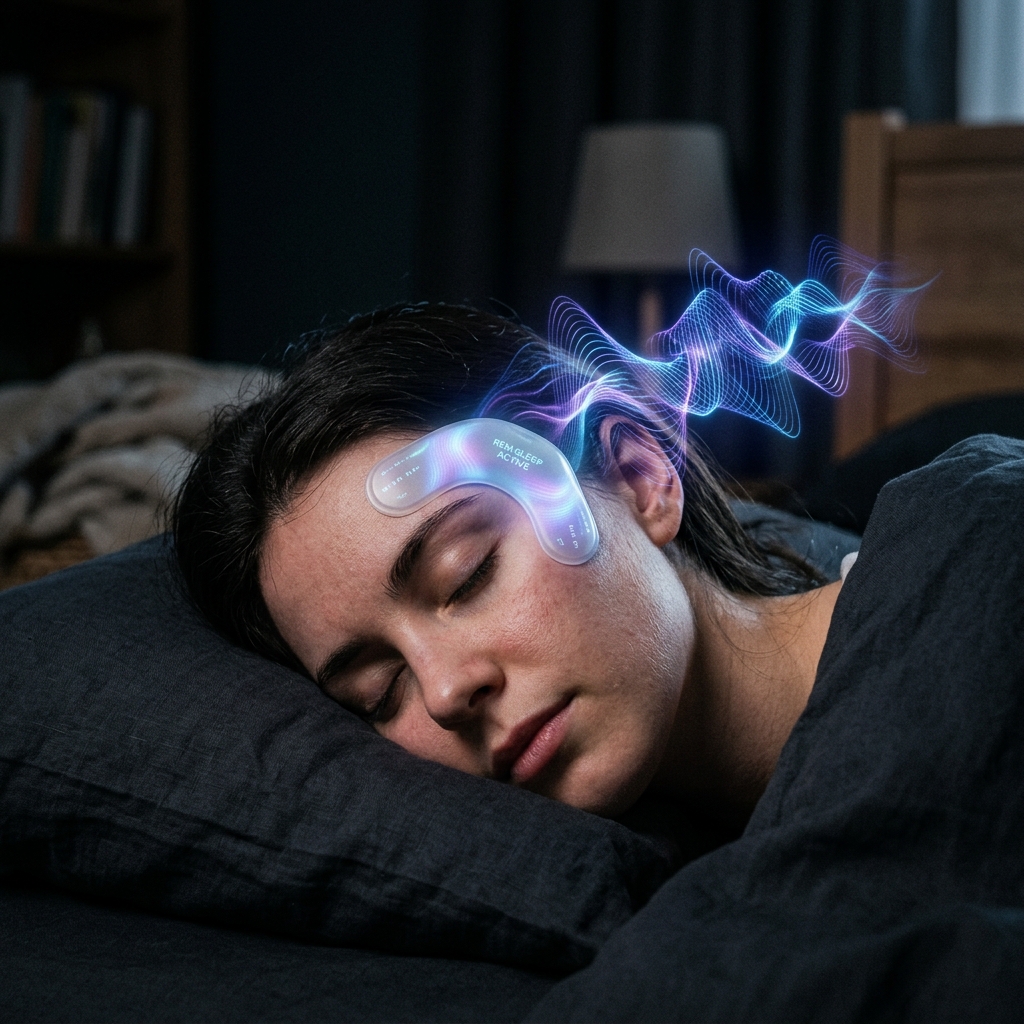
Clinical data from early-phase trials show that adaptive DBS reduces total electrical energy delivered to the brain by 30-50% compared to conventional continuous DBS while maintaining equivalent or superior motor symptom control. Patients report fewer stimulation-induced side effects — particularly speech difficulties and involuntary movements (dyskinesia) — because the system avoids overstimulation during low-symptom periods. Sleep quality also improved, as the device automatically reduced stimulation during NREM sleep when beta oscillations naturally decrease.
Why This Matters for Body-Mind Practice
Adaptive DBS demonstrates a principle central to body-mind practice: that the nervous system's needs fluctuate continuously, and interventions should respond to real-time physiological state rather than applying fixed doses. The technology validates the concept of "meeting the nervous system where it is" — an idea familiar to practitioners of responsive breathwork, biofeedback, and somatic therapy. As closed-loop neuromodulation matures, it may inform how non-invasive interventions are personalized based on real-time autonomic and neural biomarkers.
Source
- Closed-loop adaptive DBS for Parkinson's disease. — Nature Biomedical Engineering