Key Findings
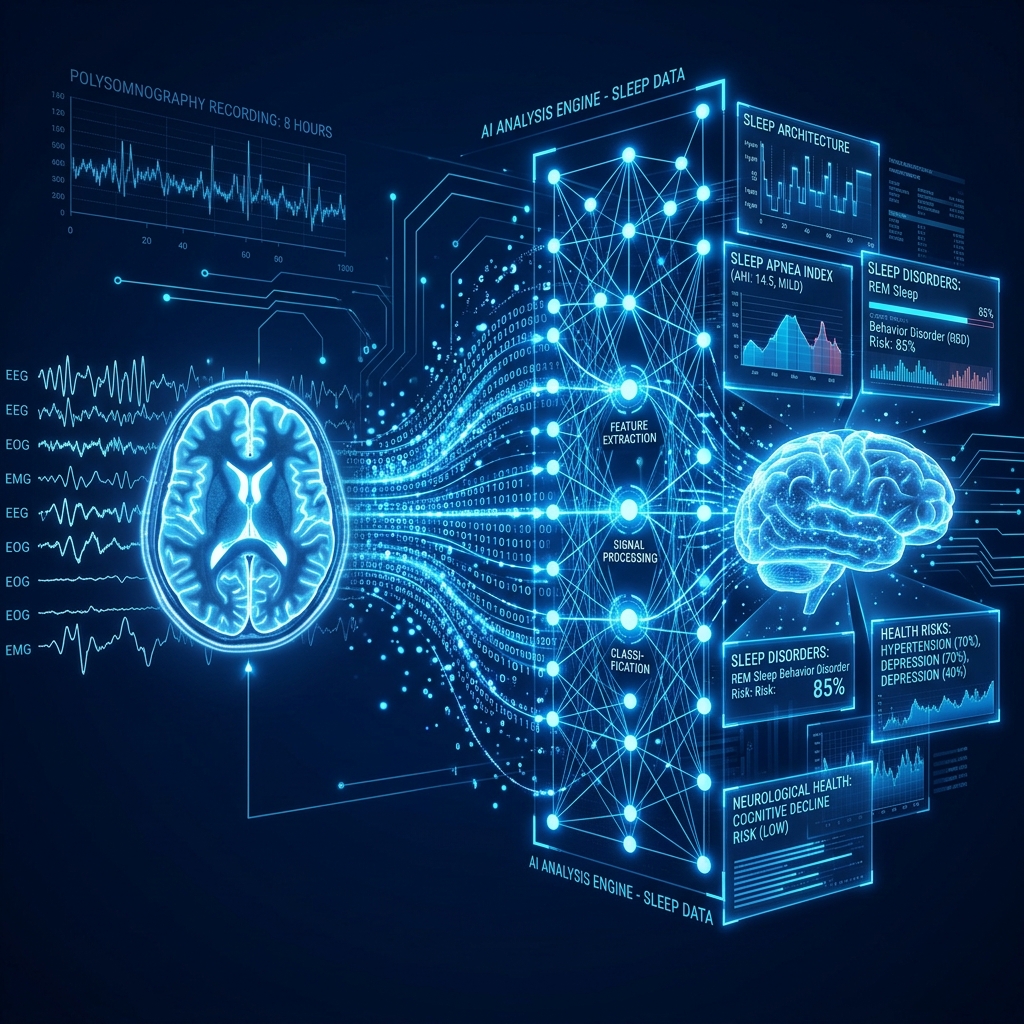
To identify predictors of emotion recognition performance from sleep metrics, including obstructive sleep apnea (OSA) and sleep architecture. Adults from the Icelandic population completed the Penn Emotion Recognition Task, assessing facial expressions presented with different intensities. Subsequently, participants underwent three consecutive nights with self-applied polysomnography. Sleep parameters were averaged across nights. Regression analyses, adjusted for age, gender, and depressive symptoms were used to examine associations between sleep and emotion recognition. Fifty-five participants (47.3% males, mean age 46.4 ± 14.4 years, body mass index 27.9 ± 4.6 kg/m2, apnea-hypopnea index (AHI)15.1 ± 15.6 events/h, AHI ≥ 5 in 65%) completed the study. Mean reaction times (ms) were 2746 ± 1294 for high intensity emotion, 2786 ± 995 for low intensity emotion, and 3308 ± 2192 for neutral stimuli, while recognition accuracy was 88.8 ± 8.9% for high intensity emotion, 73.3 ± 10.2% for low intensity emotion, and 85.0 ± 19.2% for neutral stimuli. Hypoxic burden metrics and sleep architecture, particularly desaturation severity (B = 363 ms for low intensity emotion, p < .01), sleep efficiency (B = -335 ms for low p = .01, B = -415 ms for high intensity emotion p = .02) and REM percentage (B = -310 ms for low intensity, p = .02), independently predicted performance. Using multiple-night polysomnography improved the strength of the linear models compared to data from a single-night. OSA-related hypoxic burden and sleep architecture are significantly associated with emotion recognition, underlying the importance of sleep for neurocognitive vulnerability. Statement of Significance The impact of obstructive sleep apnea (OSA) on cognitive performance has been studied. However, little is known about its effects on emotion recognition, a key prosocial skill essential for interactions and psychological well-being. This study addresses this gap by focusing on general population with mild-to-severe OSA. It highlights the importance of using novel metrics of oxygen desaturation burden rather than the apnea-hypopnea index, which may underestimate the cognitive consequences of OSA. Other important sleep quality measures include sleep length and continuity. Future research should investigate the effects of improved sleep and OSA treatment on emotion recognition. The importance of understanding the subtle impact of OSA on emotion recognition is evident, as it is a crucial determinant of everyday social interaction.
Why This Matters for Body-Mind Practice
[Draft — editorial context needed]