The Dataset
In late July 2026, researchers at the Feinstein Institutes for Medical Research released the world's first comprehensive anatomical map of the human vagus nerve. The dataset covers 30 human donors and 60 vagus nerves, revealing that each vagus nerve contains up to 200,000 individual nerve fibers — far more than previously documented in standard anatomy references.
The full dataset is publicly available through SPARC Science, the NIH-funded open data platform for autonomic neuroscience.
Why This Matters for Neuromodulation
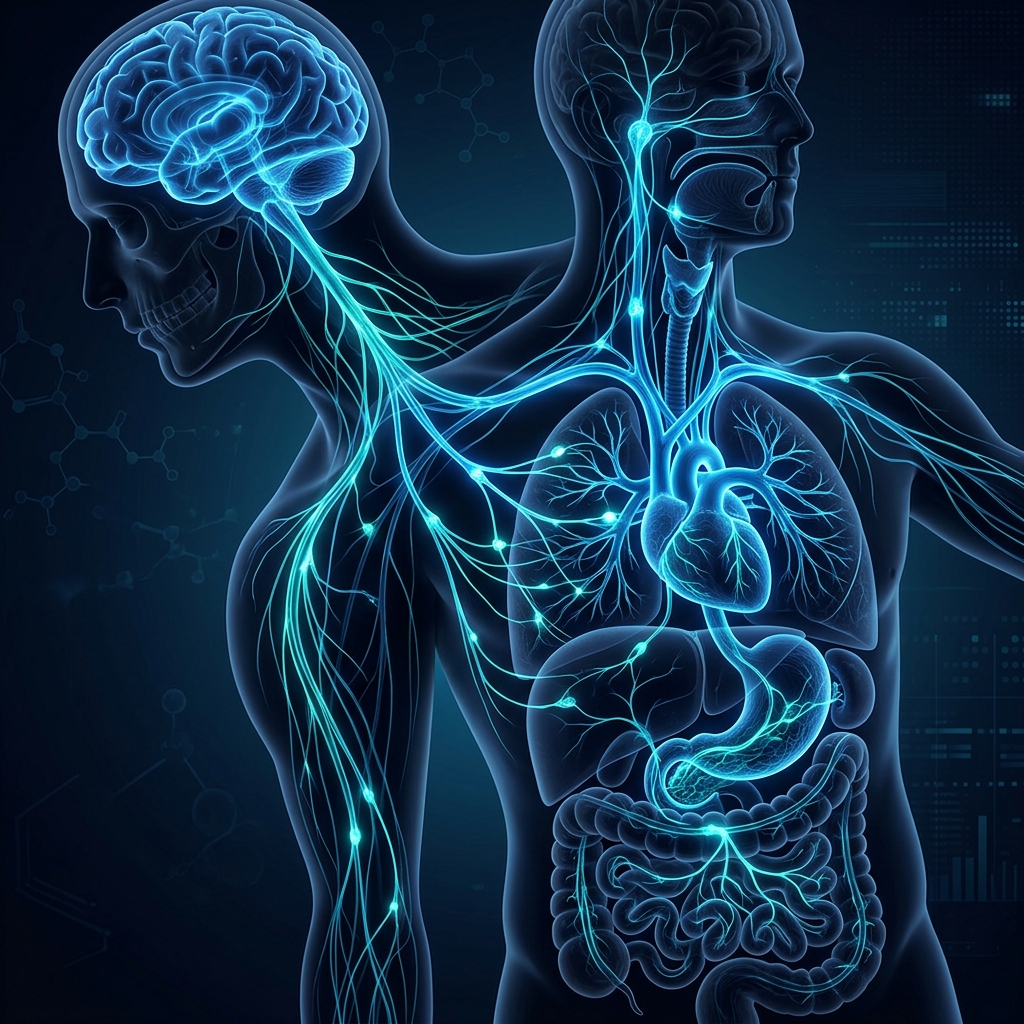
The vagus nerve is the primary conduit between the brain and the body's major organ systems — heart, lungs, gut, liver, and immune system. It carries both sensory (afferent) and motor (efferent) signals that regulate inflammation, heart rate, digestion, and mood.
Despite being the target of multiple FDA-cleared devices (for epilepsy, depression, and rheumatoid arthritis), the vagus nerve's anatomy has remained surprisingly poorly mapped at high resolution. Most stimulation devices deliver current to a region of the nerve without precise knowledge of which fiber populations they activate.
Implications for Consumer Devices
This map has direct implications for the growing category of non-invasive vagus nerve stimulators reviewed by Body Mind State:
- Nurosym, Pulsetto, and similar taVNS devices stimulate the auricular branch of the vagus nerve through the ear. The new map reveals the fiber composition of this branch with unprecedented detail, which could inform next-generation electrode designs.
- Implantable VNS devices (e.g., SetPoint Medical's bioelectronic medicine for autoimmune disease) will benefit from understanding exactly which fibers to target for anti-inflammatory vs. cardiac vs. gastrointestinal effects.
- Closed-loop systems like the newly launched Luna Plus taVNS wearable could use this anatomical data to refine stimulation parameters based on fiber-type targeting.
Key Numbers
| Metric | Value |
|---|---|
| Donors | 30 |
| Vagus nerves mapped | 60 |
| Fibers per nerve (up to) | 200,000 |
| Data access | Open — SPARC Science |
| Institution | Feinstein Institutes for Medical Research |
Body Mind State Assessment
This is a landmark dataset for the field. The gap between consumer VNS devices and clinical-grade bioelectronic medicine has always been partly anatomical — we didn't have enough resolution to know what we were stimulating. This map closes that gap. Expect it to become a foundational reference for every VNS device manufacturer within the next 12 months.