![[Difference of autonomic responses to transcutaneous auricular vagus nerve stimulation between high-altitude and low-altitude populations]](https://storage.googleapis.com/body-mind-state-articles/images/articles/difference-of-autonomic-responses-to-transcutaneous-auricula.png)
Key Findings
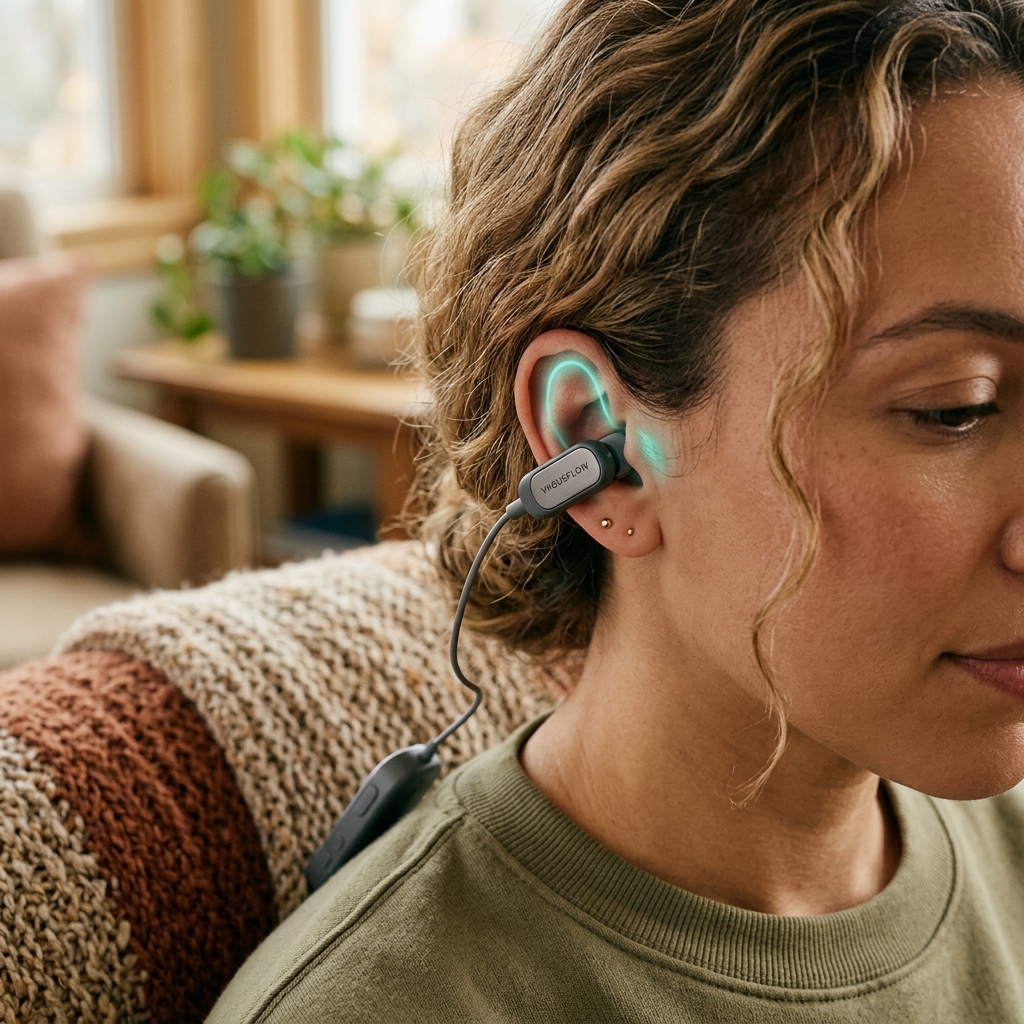
To compare the difference of autonomic responses to transcutaneous auricular vagus nerve stimulation (taVNS) between high-altitude and low-altitude populations, explore the characteristics of neural response under the background of high altitude hypoxia. A total of 30 border guards stationed in high altitude areas for an extended period were included as the high altitude group. At the same time, 30 healthy subjects were recruited in Beijing as the low altitude group. In both groups, taVNS was applied bilaterally to the auricular branches of the vagus nerve distribution areas (auricular points corresponding to shen[CO10] and xin[CO15]). Using a multimodal wristband, photoplethysmography (PPG) signals were collected during the baseline period, stimulation period, and recovery period. Heart rate (HR) and time-domain and frequency-domain indexes of heart rate variability (HRV) were compared between the two groups. The time-domain indexes included the standard deviation of normal-to-normal intervals (SDNN), the root mean square of successive differences (RMSSD), and the percentage of adjacent normal RR intervals differing by more than 50 ms (pNN50). The frequency-domain indexes included low-frequency power (LF), high-frequency power (HF), and low-frequency/high- frequency (LF/HF). In the high altitude group, HR during the stimulation period was lower than that during the baseline period (P<0.05), and RMSSD was lower than that during the recovery period (P<0.05). In the low altitude group, all indexes showed no statistically significant differences among the baseline, stimulation, and recovery periods (P>0.05). The high altitude group exhibited higher HR, SDNN, RMSSD, pNN50, LF, and HF across all three periods compared to the low altitude group (P<0.05), and lower LF/HF compared to the low altitude group (P<0.05). Under taVNS intervention, the vagal responses in high-altitude populations exhibit a characteristic pattern of delayed activation. This finding suggests that taVNS interventions for high-altitude populations should appropriately extend post-stimulation observation time and optimize stimulation patterns. 目的:比较高海拔与低海拔人群在接受经皮耳迷走神经刺激(taVNS)干预时的自主神经反应差异,揭示高海拔低氧背景下的神经响应特征。 方法:纳入30例长期驻守高海拔地区的戍边警察作为高海拔组。同期在北京招募30例健康受试者作为低海拔组。两组均选取双侧耳迷走神经分布区(耳穴肾、心)进行taVNS干预。使用多模态手环采集基线期、刺激期及恢复期的光电容积脉搏波(PPG)信号,比较两组受试者的心率(HR)及心率变异性(HRV)的时域与频域指标。时域指标包括正常逐搏间期标准差(SDNN)、心率变异平方根(RMSSD)、相邻正常RR间期差值大于50 ms的百分比(pNN50),频域指标包括低频功率(LF)、高频功率(HF)、低频与高频功率的比值(LF/HF)。 结果:高海拔组受试者刺激期HR低于基线期(P<0.05),RMSSD低于恢复期(P<0.05);低海拔组受试者所有指标在基线期、刺激期与恢复期3个阶段差异无统计学意义(P>0.05)。高海拔组受试者3个阶段的HR、SDNN、RMSSD、pNN50、LF和HF均高于低海拔组(P<0.05),LF/HF低于低海拔组(P<0.05)。 结论:taVNS干预下高海拔人群的迷走反应呈“延迟激活”特征,针对高海拔人群的taVNS干预应适当延长刺激后的观察时间,并优化刺激节律。.
Why This Matters for Body-Mind Practice
[Draft — editorial context needed]
Source
- [[Difference of autonomic responses to transcutaneous auricular vagus nerve stimulation between high-altitude and low-altitude populations].](https://pubmed.ncbi.nlm.nih.gov/42443073/) — Zhongguo zhen jiu = Chinese acupuncture & moxibustion
- Zhongguo zhen jiu = Chinese acupuncture & moxibustionRead Source →