The Dogma That Held for a Century
In 1913, Santiago Ramón y Cajal — the father of modern neuroscience, Nobel laureate, the man who first drew the neuron — wrote a sentence that would define brain science for the next 85 years:
"In the adult centers, the nerve paths are something fixed, ended, immutable. Everything may die, nothing may be regenerated."
It was a reasonable conclusion at the time. Cajal had spent decades peering through microscopes at brain tissue, and what he saw looked permanent. The architecture of the adult brain appeared to be set in stone — a cathedral built in childhood and youth, slowly crumbling thereafter.
His authority was so towering, his drawings so exquisite, that nobody seriously challenged the idea until the 1990s. For most of the 20th century, neuroscience operated under a foundational assumption: the adult brain cannot change.
They were wrong. Not slightly wrong. Fundamentally, spectacularly wrong.
The Woman Who Could See Again
In the early 2000s, a woman known in the medical literature as "Patient S.B." presented neurologist Oliver Sacks with a problem. She had been cross-eyed since infancy and had never experienced stereoscopic vision — the ability to see depth. She'd lived her entire life in a flat, two-dimensional visual world.
The standard neuroscience of the time said this was irreversible. The visual cortex has a "critical period" — a window in early childhood during which it wires itself for depth perception. Miss that window, and the circuits never form. Patient S.B. had missed it by decades.
Then she started vision therapy. Simple exercises. Eye movements. Focusing drills.
And at age 48, she began to see in 3D.
Not partially. Not vaguely. She described snowflakes falling toward her for the first time, the startling depth of a steering wheel, the way her office seemed to expand into a space she'd never perceived. The circuits that were supposed to be permanently absent had somehow built themselves.
This was not supposed to be possible.
What Neuroplasticity Actually Means
Neuroplasticity is the brain's ability to reorganize itself — to form new connections, strengthen existing ones, prune unused pathways, and in some cases, recruit entirely new regions for new tasks. It happens at multiple levels:
Synaptic plasticity — Individual connections between neurons get stronger or weaker depending on how often they fire together. This is the basis of learning. The neuroscience cliché "neurons that fire together wire together" (Hebb's rule, 1949) is an oversimplification, but directionally correct.
Structural plasticity — The physical structure of the brain can change. London taxi drivers who spend years memorizing the city's labyrinthine streets develop measurably larger hippocampi (the brain region responsible for spatial navigation). Musicians who practice for thousands of hours develop enlarged motor cortices specific to their instrument. Meditators show increased cortical thickness in regions associated with attention and interoception.
Functional plasticity — When one brain region is damaged, neighboring regions can sometimes take over its functions. This is how stroke patients relearn to speak or move — the brain reroutes around the damage, building new highways when the old ones are destroyed.
Neurogenesis — The most controversial form. For decades, scientists believed no new neurons were born in the adult brain. Then, in 1998, Peter Eriksson and Fred Gage demonstrated neurogenesis in the human hippocampus — new neurons being born in the brains of people in their fifties, sixties, and seventies. The extent and significance of adult neurogenesis remains debated, but the fact of it shattered another piece of the old dogma.
The Dark Side of Plasticity
Here's what the TED talks and self-help books usually leave out: neuroplasticity is not inherently good. The brain's ability to rewire itself is a mechanism, not a virtue. It can work for you or against you.
Chronic pain is neuroplastic. When pain signals fire repeatedly, the nervous system can become sensitized — turning up the volume on pain circuits until normal sensations register as painful. This is called central sensitization, and it's the reason many people with chronic pain have nervous systems that are, in a very real sense, too good at their job. The brain learned pain, and it learned it well.
Addiction is neuroplastic. The dopamine pathways that drive substance abuse are strengthened through the same Hebbian learning that helps you master a musical instrument. The brain isn't broken in addiction — it's doing exactly what brains do. It's just wiring itself around the wrong reward.
Anxiety is neuroplastic. Repetitive worry strengthens worry circuits. The more you ruminate, the easier rumination becomes. The anxious brain is a well-practiced brain — it has simply practiced the wrong thing.
Trauma is neuroplastic. PTSD involves the over-consolidation of threat memories. The amygdala becomes hyperactive. The prefrontal cortex — the region responsible for rational assessment of danger — becomes less effective. The brain has reorganized itself around the trauma, and it stays reorganized until something intervenes.
This is both the challenge and the opportunity. If the brain can wire itself into dysfunction, it can — at least in principle — wire itself back out.
How to Use This
The research on deliberately harnessing neuroplasticity is still maturing, but several principles are well-established:
1. Repetition is non-negotiable
Neuroplastic change requires repeated exposure. A single meditation session doesn't rewire your brain any more than a single piano lesson makes you a pianist. The studies showing structural brain changes from meditation (Lazar et al., 2005; Hölzel et al., 2011) involved participants who practiced daily for weeks or months.
There are no shortcuts here. The brain changes through sustained, repeated effort. Anyone selling you neuroplasticity in a weekend retreat is selling you something else.
2. Attention is the gate
Michael Merzenich, one of the pioneers of neuroplasticity research, has consistently emphasized that passive exposure doesn't drive change — attended experience does. Simply being exposed to a stimulus isn't enough. You need to be paying attention. Focused attention releases neuromodulators (acetylcholine, norepinephrine) that signal the brain: "This matters. Wire this in."
This has implications for everything from learning to therapy. Going through the motions doesn't work. Presence does.
3. Sleep consolidates the changes
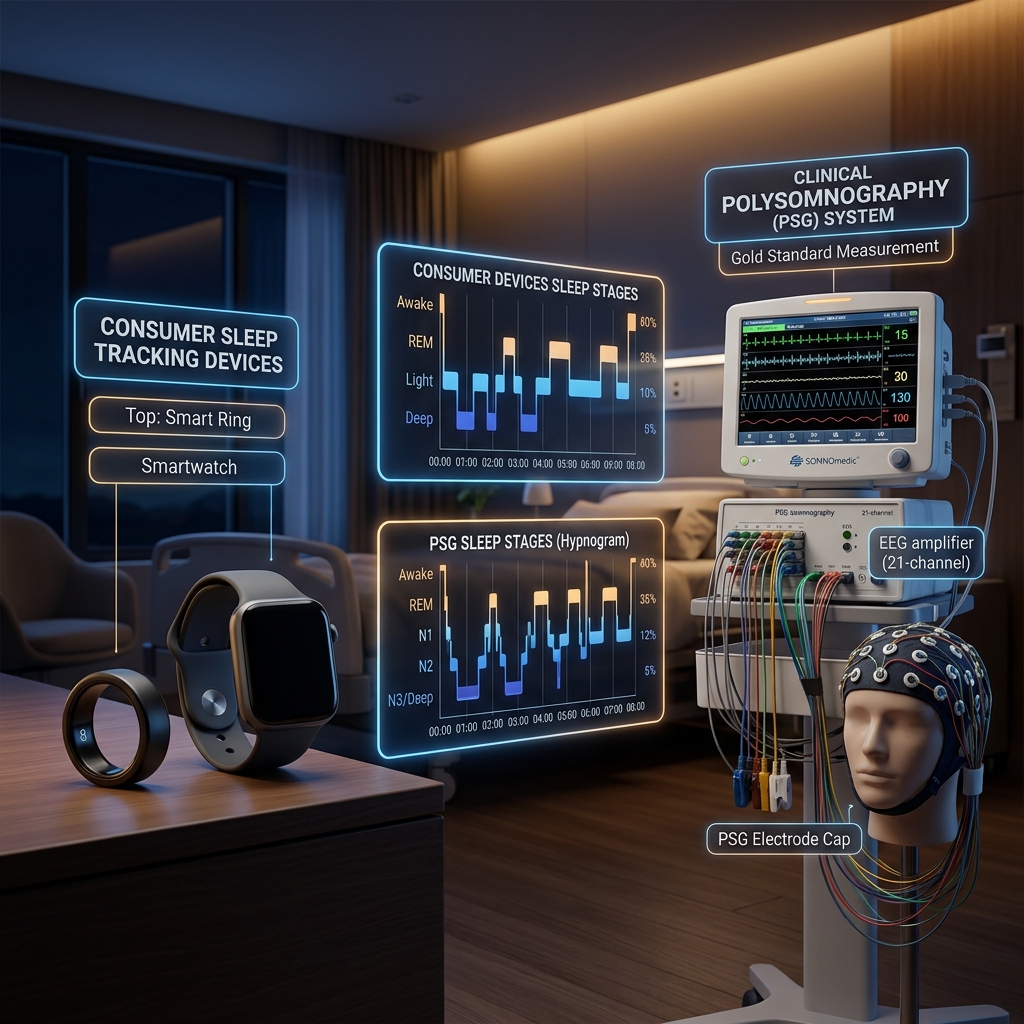
The rewiring doesn't happen during practice — it happens during sleep. Specifically, during deep sleep and REM sleep, the brain replays and consolidates the patterns it encountered during the day. This is why sleep deprivation devastates learning, and why a good night's sleep after practice often produces performance improvements that weren't visible the day before.
If you're trying to change your brain, sleep isn't optional. It's the second half of the process.
4. Stress narrows; safety widens
Under chronic stress, the brain shifts resources toward survival circuits and away from the prefrontal cortex — the region most responsible for flexible, creative thinking. Neuroplastic change is harder when the nervous system is in threat mode. This is why therapeutic approaches that first establish safety (like Somatic Experiencing or polyvagal-informed therapy) often produce faster results than approaches that jump straight to exposure.
Your brain learns best when it feels safe enough to learn.
5. The window never fully closes
Patient S.B. gained stereoscopic vision at 48. Stroke patients in their eighties regain speech. London taxi drivers grow their hippocampi in middle age. The critical periods of childhood may be the easiest time to wire the brain, but they are not the only time.
The old model said the brain was concrete — poured in childhood and hardened by adulthood. The new model says it's more like a living forest — always growing, always responding to its environment, always capable of change.
The forest just needs the right conditions.
What Cajal Couldn't See
Ramón y Cajal spent his life drawing neurons with a level of artistic precision that still hasn't been matched. His illustrations are as beautiful as anything in a Renaissance gallery. And his conclusion — that the adult brain was fixed — was honest. He described what he observed.
What he couldn't observe was time. Neuroplastic changes happen over weeks, months, and years. They happen at scales too small and too slow for a man with a microscope and a pen to detect. The brain looked fixed because Cajal was looking at snapshots, not time-lapse.
A century later, with fMRI, diffusion tensor imaging, and molecular tracing, we can finally watch the brain change in real time. And what we see is a brain that never stops building itself — for better or worse, in sickness and in health, from the first breath to the last.
Your brain is not finished. It was never finished. The question is not whether it will change. The question is whether you'll have any say in how.
Sources: Ramón y Cajal, "Degeneration and Regeneration of the Nervous System," 1913. Eriksson et al., "Neurogenesis in the Adult Human Hippocampus," Nature Medicine, 1998. Maguire et al., "Navigation-Related Structural Change in the Hippocampi of Taxi Drivers," PNAS, 2000. Lazar et al., "Meditation Experience Is Associated with Increased Cortical Thickness," Neuroreport, 2005. Merzenich, "Soft-Wired," 2013. Barry, "Fixing My Gaze," 2009.
Watch: Andrew Huberman — How Your Brain Rewires Itself
Dr. Huberman explains the biological mechanisms of neuroplasticity — how focused attention, repetition, and sleep consolidation physically reshape neural circuits throughout adulthood, not just in childhood.