Overview
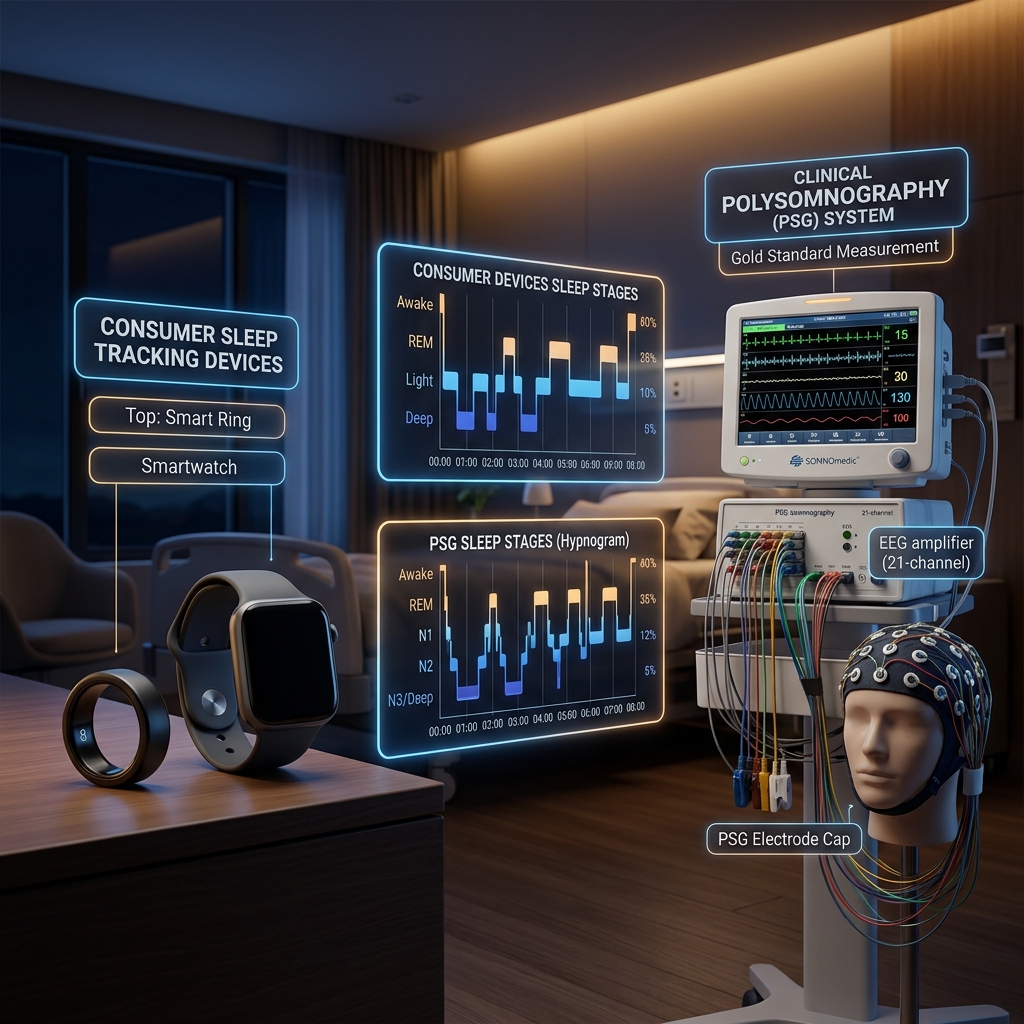
Consumer sleep tracking has become ubiquitous — Oura rings, Apple Watches, Whoop bands, and Garmin devices now generate nightly sleep architecture reports that were previously available only through in-lab polysomnography (PSG). A 2026 meta-analysis synthesizing data from 23 validation studies examines where these devices agree with clinical gold-standard measurements and where critical gaps remain.
Where Wearables Are Accurate
Consumer devices perform well for several core metrics:
- Total sleep time: Within 15-30 minutes of PSG for most devices, though with a consistent tendency to overestimate
- Sleep onset latency: Reasonably accurate for normal sleepers, less reliable for insomnia populations
- Wake after sleep onset (WASO): Improving rapidly with newer algorithms, now within 20% of PSG values
- Night-to-night trends: Strong correlation with PSG for tracking longitudinal patterns over weeks and months
Where Wearables Fall Short
- Sleep staging accuracy: N1/N2/N3 discrimination remains unreliable — devices frequently misclassify light sleep as deep sleep, with deep sleep overestimated by 10-25 minutes on average
- REM detection: Better than NREM staging but still imprecise, particularly at sleep-wake transitions
- Clinical populations: Accuracy degrades significantly in sleep apnea, restless leg syndrome, and periodic limb movement disorder
- Movement artifacts: Any device relying primarily on accelerometry misinterprets quiet wakefulness as sleep
The Clinical vs Consumer Gap
The American Academy of Sleep Medicine maintains that consumer wearables are not diagnostic tools and cannot replace PSG for identifying sleep disorders. However, the 2026 evidence suggests a clear role for wearables in longitudinal monitoring — tracking sleep hygiene interventions, identifying circadian misalignment, and motivating behavioral change through continuous feedback.
Why This Matters for Body-Mind Practice
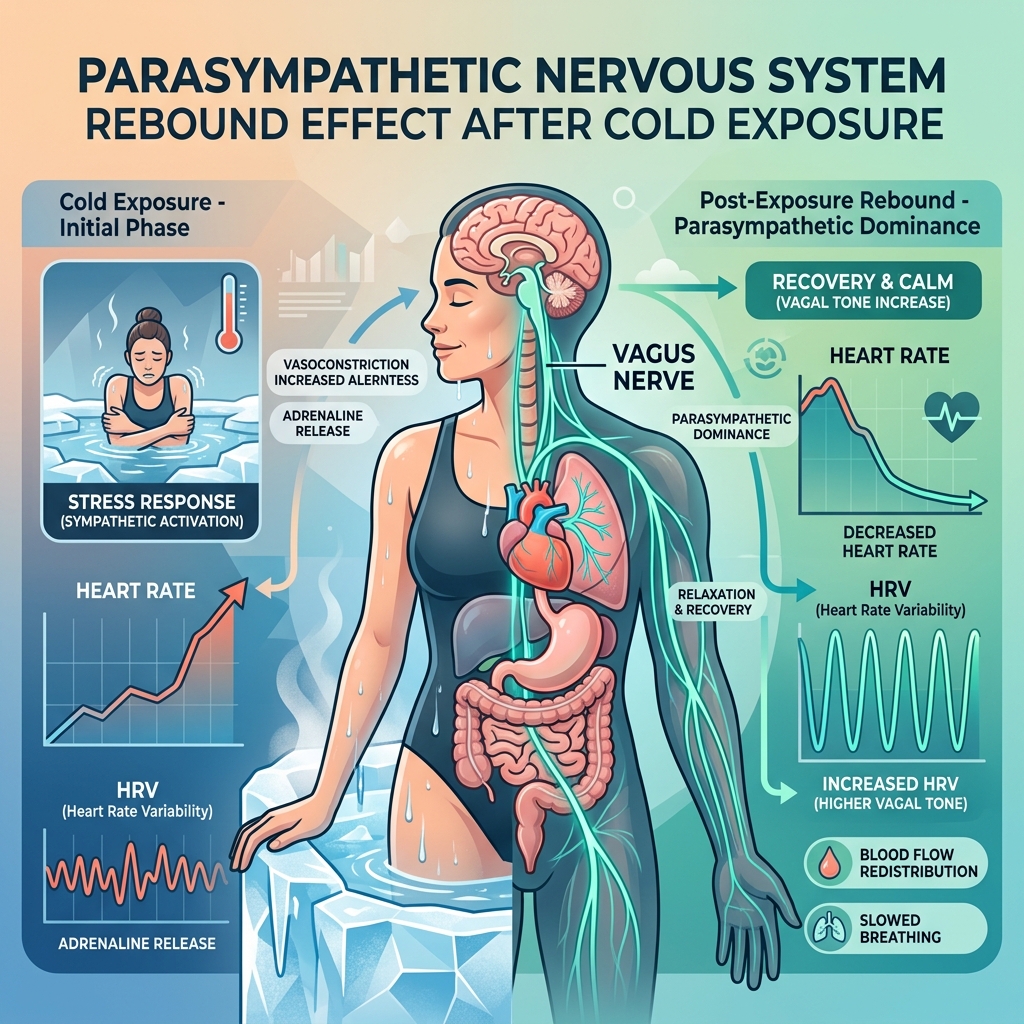
For practitioners using HRV, sleep quality, and recovery metrics to guide autonomic training programs, understanding wearable limitations prevents over-interpreting nightly data. The key insight from the 2026 evidence: trust the trends, question the details. A wearable showing declining deep sleep over two weeks is meaningful; a single night's staging breakdown is not. Practitioners should combine wearable data with subjective sleep quality assessments and autonomic markers for a complete picture.
Source
- Consumer sleep wearables vs polysomnography: 2026 meta-analysis. — Sleep Medicine Reviews