Overview
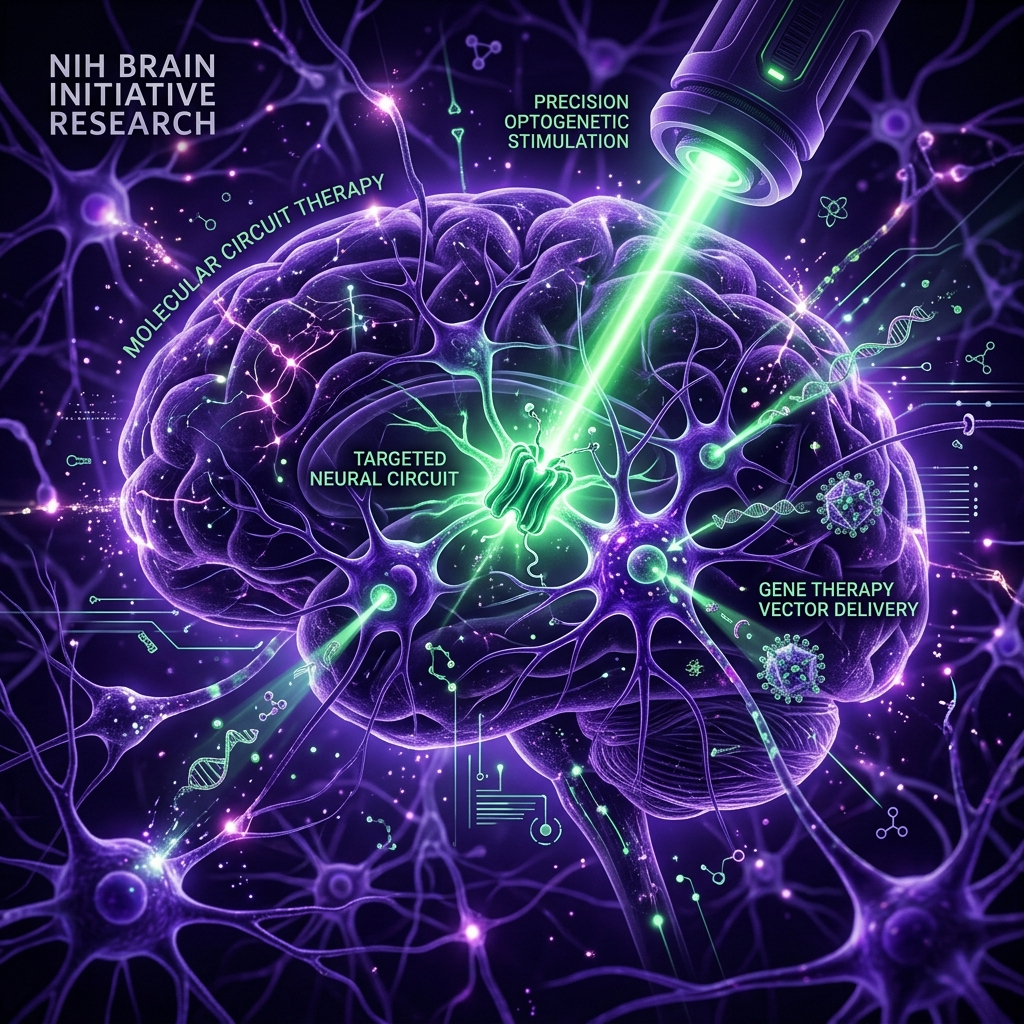
The NIH BRAIN Initiative has expanded its funding portfolio in 2026 to support precision molecular circuit therapies — a new class of interventions that combine viral vector-delivered molecular tools (optogenetic actuators, chemogenetic receptors, or engineered ion channels) with targeted circuit modulation to treat psychiatric disorders that have failed conventional pharmacological and neuromodulation approaches.
The expanded funding, totaling approximately $120 million across multiple R01 and U01 mechanisms, prioritizes translational research that bridges the gap between preclinical circuit neuroscience and clinical psychiatry. Awards support projects spanning 3-5 years, with a requirement for human-applicable safety data by Year 3.
Key Research Priorities
- Cell-type-specific neuromodulation — developing viral vectors that target defined neuronal subtypes (e.g., parvalbumin interneurons in prefrontal cortex) for circuit-level precision
- Combinatorial circuit therapies — using multiple molecular tools simultaneously to modulate interconnected circuits (e.g., prefrontal-amygdala projections in PTSD)
- Chronic molecular circuit interfaces — engineering stable, long-lasting molecular actuators that maintain therapeutic effect over months to years
- Biomarker-guided patient selection — identifying EEG, fMRI, or peripheral biomarkers that predict which patients will respond to circuit-specific interventions
Why This Matters for Body-Mind Practice
The BRAIN Initiative's precision circuit approach represents the next frontier of understanding how specific neural pathways generate emotional states, autonomic responses, and behavioral patterns. For body-mind practitioners, this research is advancing fundamental knowledge about the circuits that meditation, breathwork, and somatic practices engage — including default mode network modulation, interoceptive circuitry in the insula, and vagal-brainstem pathways. As circuit-level understanding matures, it may inform more targeted body-based interventions designed to engage specific neural systems.
Source
- NIH BRAIN Initiative precision molecular circuit therapies. — National Institutes of Health